
Integrated solutions
Connect the processes needed for disassembly, material recovery or cell assembly, based on feedstock structure and processing goals.
CTP / CTM pack disassembly
Configure pre-treatment, cover removal, weld processing, cooling-plate removal and cell sorting with a combination of robots, dedicated machines and manual stations.
Discuss requirements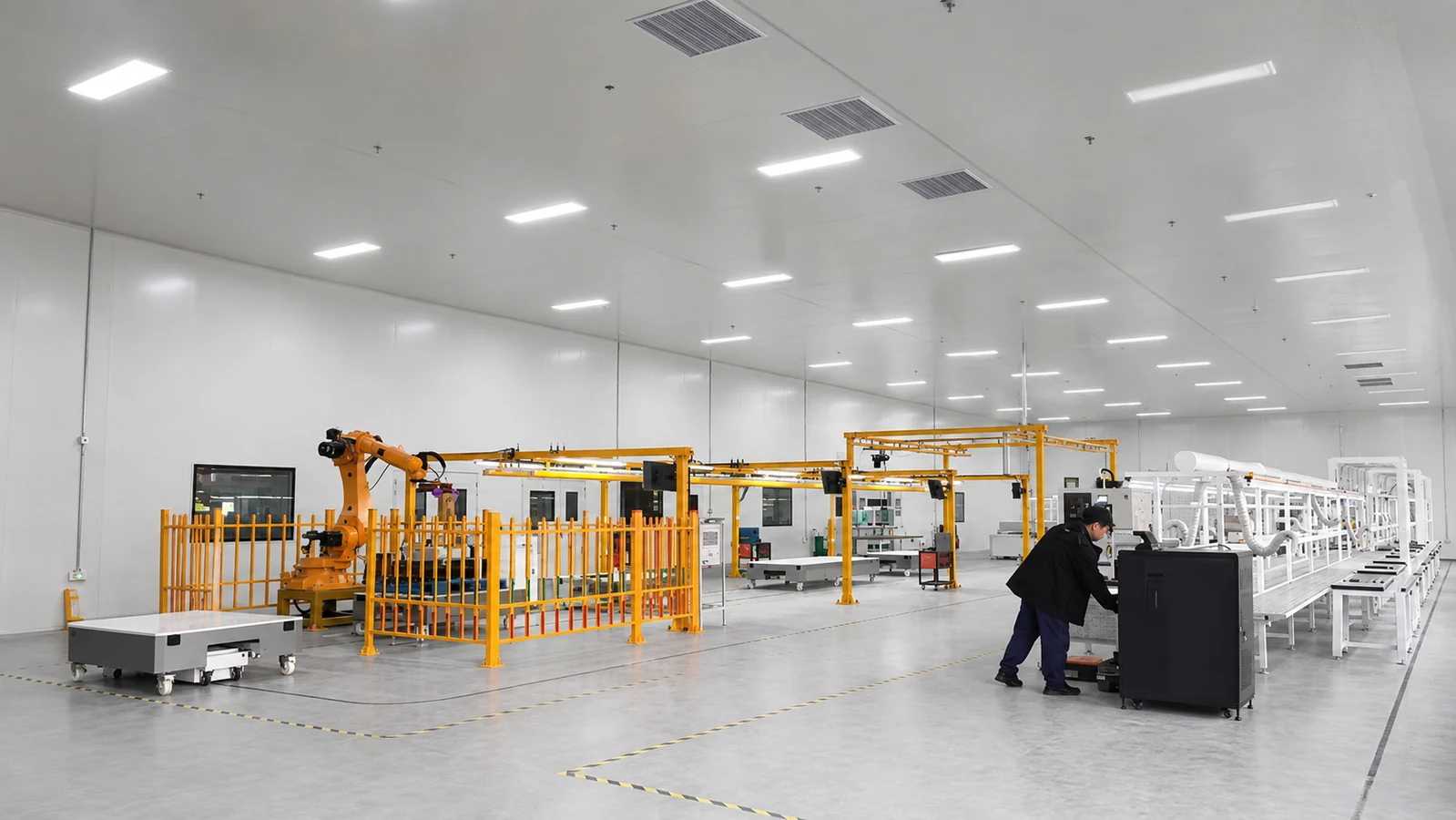
Pre-treatment
Identification, condition assessment and residual energy handling
Pack teardown
Cover, connectors and auxiliary components
Module / cell separation
Configure weld processing, cooling-plate cutting and separation
Testing & sorting
Identification, voltage and resistance testing, and sorting
Cell testing & handling
Configure cell identification, voltage and internal-resistance testing, weld milling and tray loading. Cells are collected by test result for subsequent processing.
Identification & line data
Connect pack barcode identification, information retrieval and disassembly process selection, with MES data management and process-parameter records configured for the project.
Related equipment, selected for the feedstock and process.
After disassembly: route by condition and intended use
Cells intended for material recovery proceed to suitable discharge, casing separation and material processing. Cells assessed as suitable for reuse can enter PACK assembly configured for the intended product.
Discharge & shell-cell separation
Configure discharge, shell-cell separation and collection stations for the waste cell structure and condition. Discharge equipment must match the cell electrical range; mechanical separation takes place at subsequent stations.
Discuss requirementsStation configuration
Electrical compatibility: match discharge equipment to the cell voltage and current range.
Mechanical separation: select casing-opening and separation stations for the cell structure.
Material handling: arrange collection and transport of the casing and internal materials.
Feedstock review
Confirm cell format and condition
Discharge
Match equipment to electrical requirements
Shell-cell separation
Configure stations for the cell structure
Material routing
Route shell and internal materials separately
After casing separation: select the material process
Wound-cell feedstock can be assessed for unwinding and electrode separation. Material assigned to a crushing route uses baking, crushing and separation configured for its condition, chemistry and target fractions.
Cell unwinding & electrode separation
Equipment for unwinding wound cells, separating electrodes and collecting materials, configured for the feedstock condition and required electrode integrity.
Discuss equipment configurationConfiguration considerations
Feedstock: cell structure, jelly-roll dimensions and material system.
Separation: collect positive and negative electrodes, separators and other fractions.
Integration: feeding after casing removal and subsequent material processing.
After electrode separation: process coatings and foil
Separately collected electrodes can be assessed for aqueous stripping or other downstream processes according to their coating, current collector and condition, to separate powder from copper or aluminium foil.
Aqueous electrode stripping
Aqueous processing separates electrode coatings from current collectors. Stripping, collection and downstream treatment are configured for the feedstock and target fractions.
Discuss equipment configurationConfiguration considerations
Feedstock: electrode type, coating and copper or aluminium foil condition.
Outputs: separation and collection of electrode powder and metal foil.
Site integration: water treatment, material collection and subsequent processing.
Material recovery follows the selected processing route
Aqueous stripping focuses on separating electrode coatings from current collectors. Projects using a baking and mechanical crushing route can refer to the following scheme and select equipment for their feedstock and target fractions.
Low-temperature baking, crushing & sorting
Use low-temperature baking, mechanical crushing, screening and staged sorting to produce separately collected material fractions. Condensation and exhaust treatment are configured for the project.
Discuss requirements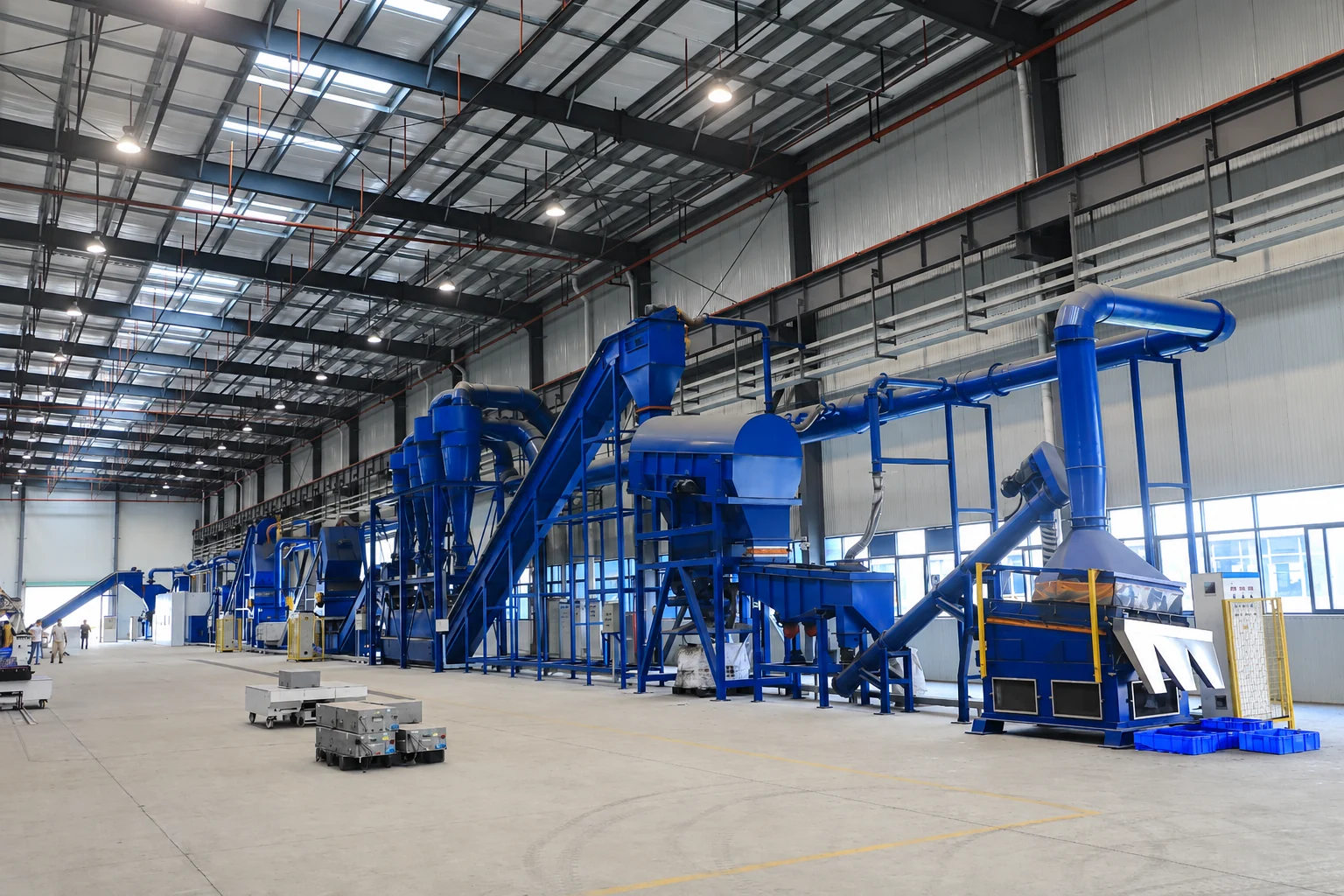
Pre-treatment
Link residual energy handling and feeding
Low-temperature baking
With supporting condensation collection
Staged crushing
Arrange processing for target particle size
Material sorting
Separate electrode powder, metals and other fractions
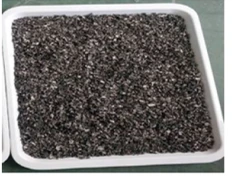
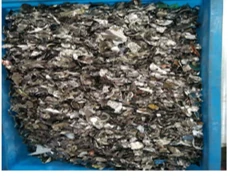
Separated material fractions
Collect powder, copper and aluminium foil, and casing materials separately for further recovery.
Related equipment, selected for the feedstock and process.
Separated fractions proceed to further recovery
Electrode powder, copper and aluminium foil, and casing fractions are collected separately for further recovery suited to their composition. For projects focused on cell reuse and grouping, see the PACK assembly scheme.
Light-power / storage PACK line
Configure testing, assembly and welding for cell formats and product specifications, supporting flexible production across multiple products and small batches.
Discuss requirements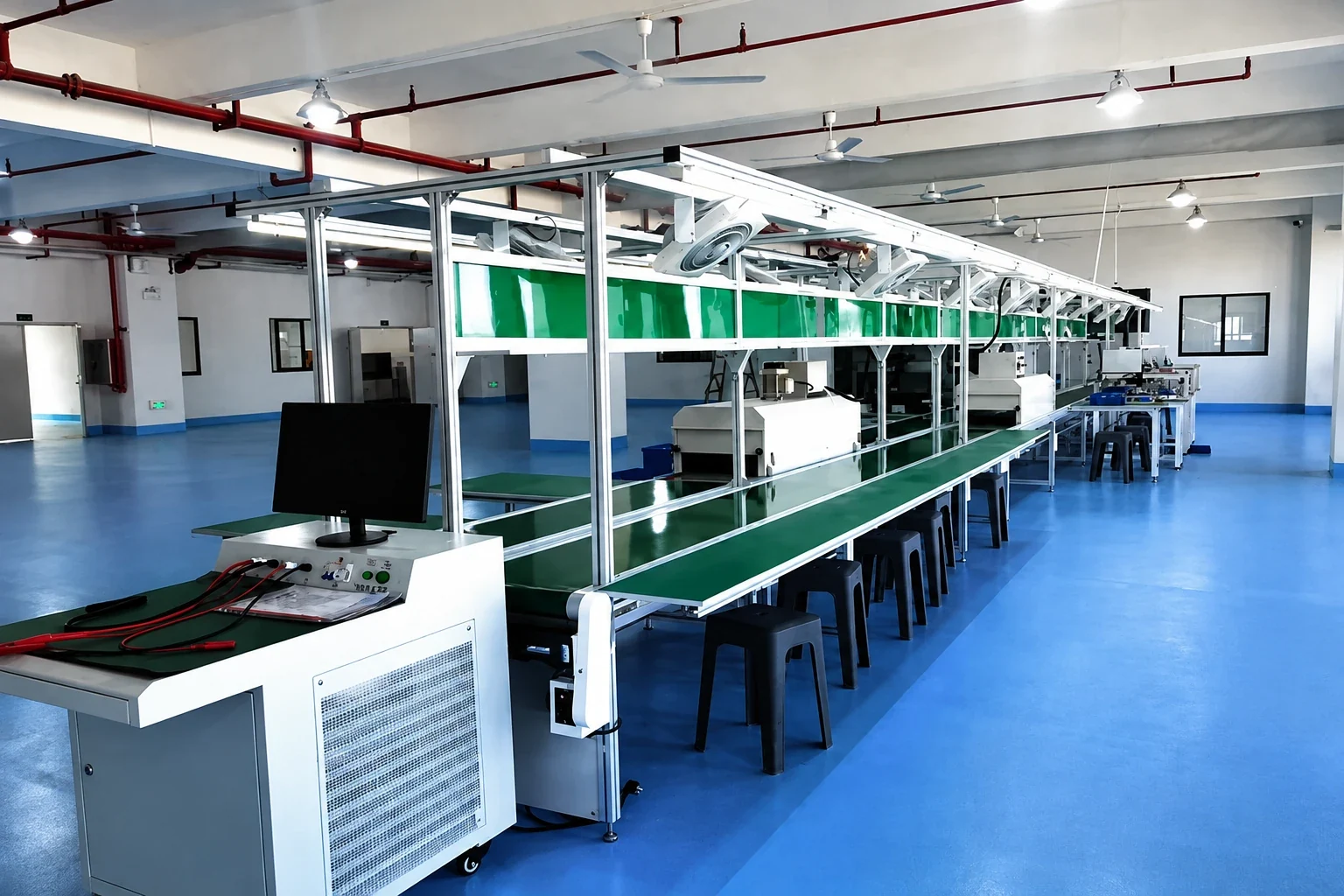
Cell testing
Screen and group cells for the product
Fixture assembly
Assemble cells, holders and connectors
Welding
Select laser or resistance welding
Pack testing
Link pack testing to downstream production
Related equipment, selected for the feedstock and process.
From suitable cells to the specified battery pack
PACK lines combine testing, grouping, assembly and welding for new cells or assessed second-life cells. Cell origin, pack specification, intended use and planned cycle time determine the stations and fixtures.
Equipment selection and line enquiries
Share your battery type, processing goals and site conditions so we can assess the process.